
Unshackle from Incest OCD
- Do intrusive sexual thoughts about family members scare you?
- Do you find yourself questioning what these thoughts mean about you?
- Do guilt, shame, and doubt keep you trapped in endless mental analysis?
If so, you are not alone.
Incest OCD is one of the most distressing and misunderstood forms of Obsessive-Compulsive Disorder. People with Incest OCD experience unwanted intrusive thoughts, images, doubts, or sensations involving family members. These experiences are deeply upsetting precisely because they are inconsistent with the person’s values, identity, and intentions. Yet the thoughts can feel so disturbing and convincing that many sufferers become trapped in cycles of fear, self-monitoring, avoidance, and compulsive attempts to find certainty.
Because the topic is so difficult to discuss, many people suffer in silence. They may spend years believing that nobody else experiences these thoughts or that the thoughts reveal something important about who they are. The shame associated with the theme often prevents people from seeking information, talking openly about their struggles, or accessing appropriate treatment.
Unshackle from Incest OCD was written to break that silence.
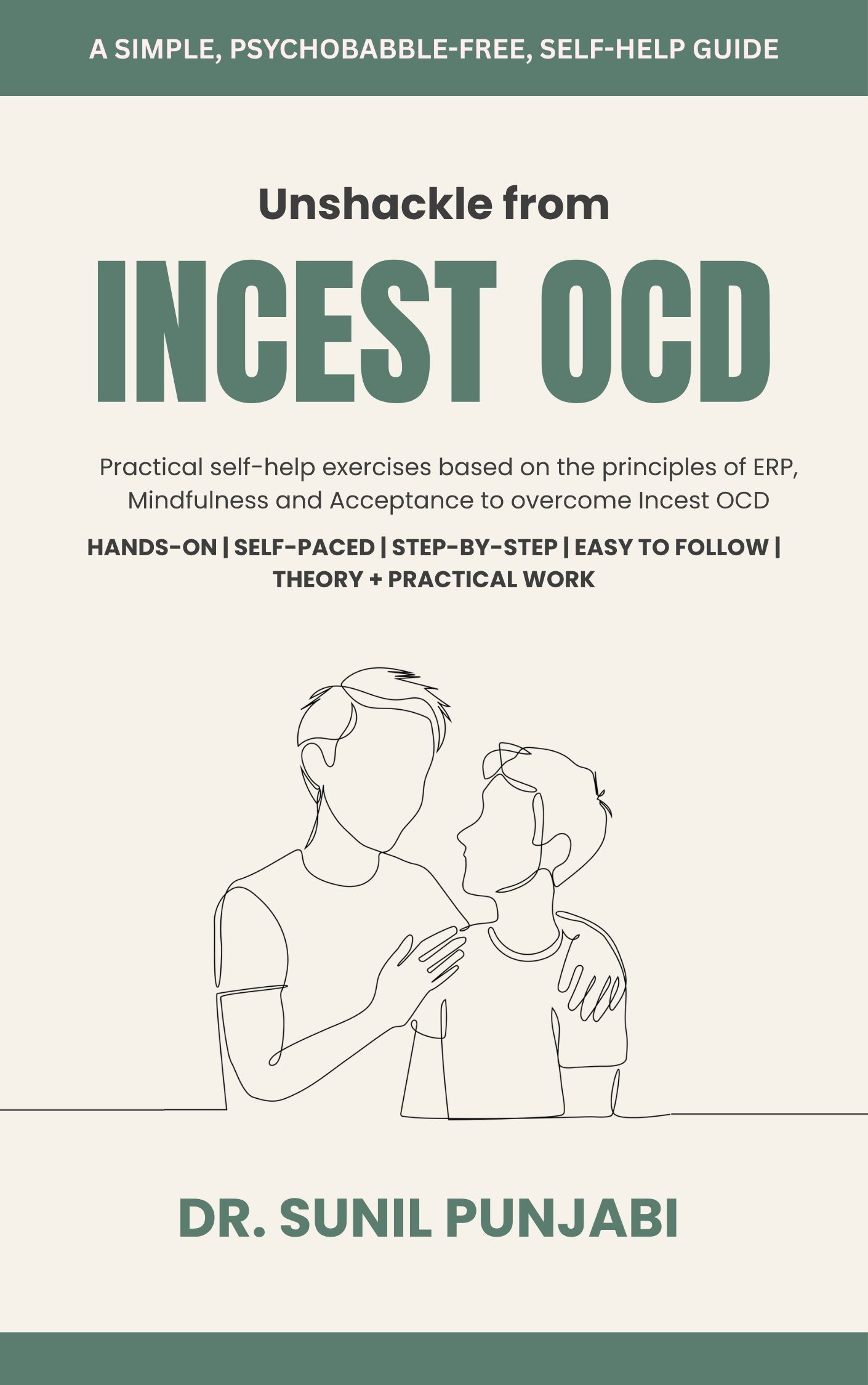
This practical self-help guide explains what Incest OCD really is, how intrusive thoughts become entangled with fear and doubt, and why the thoughts often feel so real and significant. Readers learn how OCD exploits uncertainty and creates a constant urge to analyse, check, avoid, confess, seek reassurance, or monitor reactions. Although these behaviours may temporarily reduce anxiety, they ultimately strengthen the cycle of OCD.
The book provides a step-by-step framework for understanding and managing Incest OCD using evidence-based psychological principles. Readers learn how to identify their triggers, intrusive thoughts, compulsions, and avoidance patterns while developing a clearer understanding of how OCD operates.
How This Book Will Help
At the heart of the book is Exposure and Response Prevention (ERP), the most effective psychological treatment for OCD. Through practical examples and structured exercises, readers learn how to gradually face feared thoughts and situations while resisting compulsive responses. The objective is not to eliminate intrusive thoughts or achieve certainty. Instead, it is to develop a healthier relationship with uncertainty and reduce OCD’s influence over daily life.
Drawing upon principles from mindfulness, acceptance, and modern behavioural approaches, the book also provides practical tools for responding differently to anxiety, guilt, shame, and doubt. Readers learn how to stop engaging in endless mental debates and begin directing their energy towards the things that matter most in their lives.
The book includes exercises and worksheets designed to help readers apply recovery principles to their own experiences. These tools can be used to recognise OCD patterns, track progress, challenge avoidance behaviours, and build confidence throughout the recovery journey.
Recovery is possible. You are not your thoughts. You are not your OCD. With the right understanding and approach, it is possible to step out of the cycle of fear and move towards a life guided by values rather than intrusive thoughts.
What You’ll Learn
-
What Incest OCD is and how it develops
-
Why intrusive thoughts feel so convincing and frightening
-
The difference between intrusive thoughts and genuine intentions
-
Common compulsions associated with Incest OCD
-
How reassurance-seeking and mental checking maintain OCD
-
The role of avoidance in keeping fears alive
-
The principles behind Exposure and Response Prevention (ERP)
-
Mindfulness and acceptance-based strategies for managing distress
-
How to reduce shame and self-stigma
-
Practical exercises and worksheets to support recovery
Frequently Asked Questions
What is Incest OCD?
Incest OCD is a subtype of Obsessive-Compulsive Disorder characterised by unwanted intrusive thoughts, images, doubts, or fears involving family members. These thoughts are highly distressing and inconsistent with the person’s values and intentions. The distress often leads to compulsive efforts to gain certainty about what the thoughts mean.
Why Have I Never Heard of Incest OCD Before?
Many people have never heard of Incest OCD because it is rarely discussed publicly. The topic is highly sensitive, and people who experience these intrusive thoughts often feel too ashamed, frightened, or embarrassed to talk about them. As a result, many suffer in silence and assume they are the only ones experiencing them.
Mental health awareness campaigns tend to focus on more familiar OCD themes such as contamination fears, checking, or symmetry. Less visible themes, including Incest OCD, POCD, and SO-OCD, receive far less public attention despite being well-recognized by clinicians who specialize in OCD.
The lack of discussion can create an unfortunate cycle. People do not talk about the condition because they feel ashamed, and because people do not talk about it, others assume it must be rare or abnormal. In reality, OCD can attach itself to any topic that a person finds important, meaningful, or disturbing. The thoughts may differ from one person to another, but the underlying OCD process remains the same.
If you are experiencing intrusive thoughts related to this theme, the fact that you have found information about Incest OCD is often an important first step. It means that what you are experiencing has been recognized, studied, and treated within the field of OCD and that effective help is available.
Does having these thoughts mean I want them?
No. Intrusive thoughts are a common feature of OCD and frequently involve themes that are disturbing precisely because they conflict with a person’s values. The presence of an intrusive thought does not indicate desire, intention, or likelihood of action. People with Incest OCD are typically distressed because the thoughts are unwanted and inconsistent with who they are.
Why do the thoughts feel so real?
One of the challenges of OCD is that it creates doubt and uncertainty around issues that matter deeply to the individual. The more importance a person assigns to a thought, the more attention it receives. This increased attention can make thoughts feel vivid, emotionally charged, and significant, even when they are simply intrusive thoughts.
What are common compulsions in Incest OCD?
Compulsions can include mental reviewing, reassurance-seeking, checking emotional reactions, monitoring bodily sensations, analysing thoughts, avoiding family members, avoiding physical contact, confessing thoughts to others, or repeatedly seeking certainty about one’s intentions. Although these behaviours may provide temporary relief, they often strengthen OCD over time.
What is Exposure and Response Prevention (ERP)?
Exposure and Response Prevention, or ERP, is the most widely recommended psychological treatment for OCD. ERP involves gradually facing feared thoughts, situations, or uncertainties while resisting compulsive responses. Over time, this helps reduce fear and teaches the brain that intrusive thoughts can be tolerated without relying on rituals, avoidance, or reassurance.
Can Incest OCD be overcome?
Many people with Incest OCD experience significant improvement through evidence-based treatment such as ERP. Recovery does not require eliminating intrusive thoughts entirely. Instead, it involves changing the way those thoughts are interpreted and responded to so they no longer dominate daily life.
Whom is this book for?
This book is intended for individuals struggling with intrusive thoughts involving family members, excessive doubt about what those thoughts mean, reassurance-seeking, avoidance behaviours, compulsive checking, or persistent fear related to this OCD theme. It may also be useful for family members seeking to understand OCD and mental health professionals looking for a patient-friendly resource.
Is this book suitable alongside therapy?
Yes. Many readers find that self-help resources can complement professional treatment by reinforcing recovery principles between therapy sessions. The exercises and worksheets in this book are designed to support learning and practice, while professional guidance can help tailor treatment to individual needs.
Important Note
This book is intended as a self-help resource and educational guide. It is designed to complement professional treatment, not replace it. Readers experiencing significant distress are encouraged to work with a qualified mental health professional, particularly one with experience treating OCD using evidence-based approaches such as ERP.