
Unshackle from Religious OCD
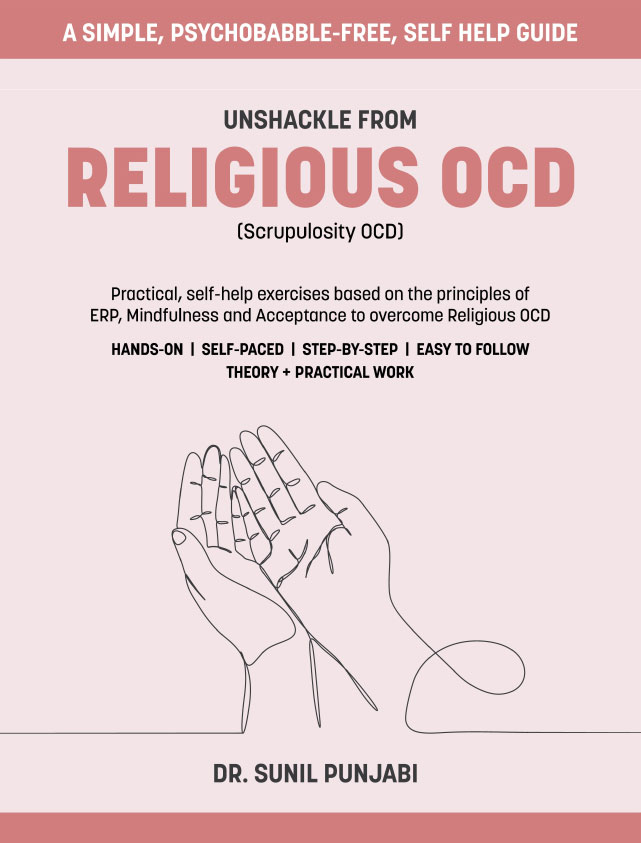
Religious OCD (or scrupulosity OCD) can turn faith into a source of fear, doubt, and guilt. Worries about sin, excessive confession, repeated prayer, and the constant need for certainty can leave people feeling trapped in their beliefs. What begins as a sincere desire to do the right thing can gradually become a cycle of anxiety and compulsive behaviours that is difficult to escape.
Unshackle from Religious OCD is a practical and compassionate guide for people struggling with Religious OCD. Written from a recovery-focused perspective, the book explains how OCD attaches itself to matters of faith and morality. The distress feels deeply personal and convincing. Readers learn how to identify the patterns of OCD and distinguish genuine religious values from OCD-driven fears. This helps them respond to intrusive thoughts in healthier ways.
Readers learn how OCD exploits uncertainty and creates a constant need for reassurance, certainty, and control. Through clear explanations and practical examples, the book helps readers identify their triggers, intrusive thoughts, compulsive behaviours, and avoidance patterns so they can begin breaking free from the cycle that maintains OCD.
How This Book Will Help
The book provides a step-by-step framework for implementing Exposure and Response Prevention (ERP), the most effective psychological treatment for OCD. Through clear explanations and practical exercises, readers learn how to gradually face feared situations while resisting compulsive responses. The goal is not to eliminate thoughts or achieve certainty, but to develop a different relationship with doubt, uncertainty, and anxiety.
Drawing upon principles from Cognitive Behavioural Therapy (CBT), mindfulness, and acceptance-based approaches, the book explores one of the most challenging aspects of Religious OCD: the fear of sin and moral failure. It helps readers understand why OCD becomes fixated on these themes and offers practical strategies for moving forward without becoming trapped in endless reassurance-seeking or self-analysis.
The book also includes worksheets designed to help readers understand OCD in general and Religious OCD in particular. These exercises allow readers to apply recovery principles directly to their own experiences, track their progress, and build confidence as they work towards recovery. Additional reading recommendations provide further support and help deepen understanding of the recovery process.
Whether you struggle with intrusive religious thoughts, excessive guilt, compulsive prayer, repeated confession, or constant fears about offending God, this book offers practical tools to help you reclaim your life from OCD while remaining true to your values and beliefs.
What You’ll Learn
-
How Religious OCD develops and maintains itself
-
Why intrusive thoughts feel so convincing
-
The difference between faith and OCD-driven fear
-
How reassurance-seeking strengthens OCD
-
The principles behind Exposure and Response Prevention (ERP)
-
Practical strategies for handling uncertainty
-
How to identify and reduce compulsive behaviours
-
Ways to apply recovery principles in everyday life
-
How worksheets can be used to track progress and build confidence
Frequently Asked Questions
What is Religious OCD?
Religious OCD, also known as Scrupulosity OCD, is a form of Obsessive-Compulsive Disorder in which OCD attaches itself to religious, moral, or spiritual concerns. People with Religious OCD often experience intrusive thoughts about sin, blasphemy, offending God, or failing to meet religious standards. These fears can lead to compulsions such as excessive prayer, repeated confession, reassurance-seeking, or mental rituals aimed at reducing anxiety.
How is Religious OCD different from being religious?
Religious belief and Religious OCD are not the same thing. Faith is generally guided by personal values, beliefs, and religious teachings. Religious OCD is driven by fear, doubt, and an overwhelming need for certainty. While faith can provide meaning and comfort, OCD creates distress and often demands repeated behaviours that never seem to bring lasting relief.
Can Religious OCD cause blasphemous or unwanted thoughts?
Yes. Many people with Religious OCD experience intrusive thoughts, images, or urges that seem completely opposed to their beliefs and values. These thoughts can feel shocking or disturbing, but their presence does not reflect a person’s character, intentions, or faith. Intrusive thoughts are a common feature of OCD and gain power when they are treated as meaningful or dangerous.
What is Exposure and Response Prevention (ERP)?
Exposure and Response Prevention, or ERP, is the most widely recommended psychological treatment for OCD. ERP involves gradually facing situations, thoughts, feelings, or uncertainties that trigger anxiety while resisting compulsive responses. Over time, this helps reduce fear and teaches the brain that anxiety can be tolerated without relying on rituals or reassurance.
Can Religious OCD be overcome?
Many people with Religious OCD experience significant improvement through evidence-based treatment such as ERP and CBT. Recovery does not mean never having intrusive thoughts again. Instead, it means learning how to respond differently to those thoughts so that they no longer control daily life, relationships, or spiritual practice.
Whom is this book for?
This book is intended for people struggling with Religious OCD, Scrupulosity OCD, intrusive religious thoughts, excessive guilt, compulsive prayer, reassurance-seeking, or fears related to sin and morality. It may also be useful for family members seeking to understand OCD and mental health professionals looking for a patient-friendly resource to recommend.
Is this book suitable for people of all faiths?
Yes. The principles discussed in this book focus on understanding and managing OCD rather than promoting any particular religious viewpoint. The recovery strategies can be applied by people from different faith backgrounds who are struggling with OCD-related fears, doubts, and compulsions.
Important Note
This book is intended as a self-help resource and educational guide. It is designed to complement professional treatment, not replace it. Readers experiencing significant distress are encouraged to work with a qualified mental health professional, particularly one with experience treating OCD using evidence-based approaches such as ERP.