
Unshackle from POCD
POCD (Pedophilia-Themed Obsessive-Compulsive Disorder) is a form of OCD characterised by intrusive thoughts, images, doubts, and fears related to the possibility of being sexually attracted to children. These thoughts are unwanted, distressing, and deeply inconsistent with the individual’s values and identity. Despite having no desire to act on these thoughts, people with POCD often become trapped in a cycle of fear, self-monitoring, reassurance-seeking, and endless attempts to gain certainty about what the thoughts mean.
The distress caused by POCD can be overwhelming. Everyday situations may become sources of anxiety. Interactions with children, media reports, memories, bodily sensations, and intrusive thoughts can trigger intense fear and self-doubt. Many people find themselves constantly analysing their reactions, monitoring their thoughts, seeking reassurance online, or avoiding situations that trigger anxiety. Unfortunately, these strategies often strengthen OCD and keep the cycle going.
Unshackle from POCD is a practical self-help guide designed to help readers understand, manage, and overcome the debilitating effects of POCD. Whether you have recently recognised the symptoms or have been struggling for years, this book provides a structured and compassionate approach to recovery.
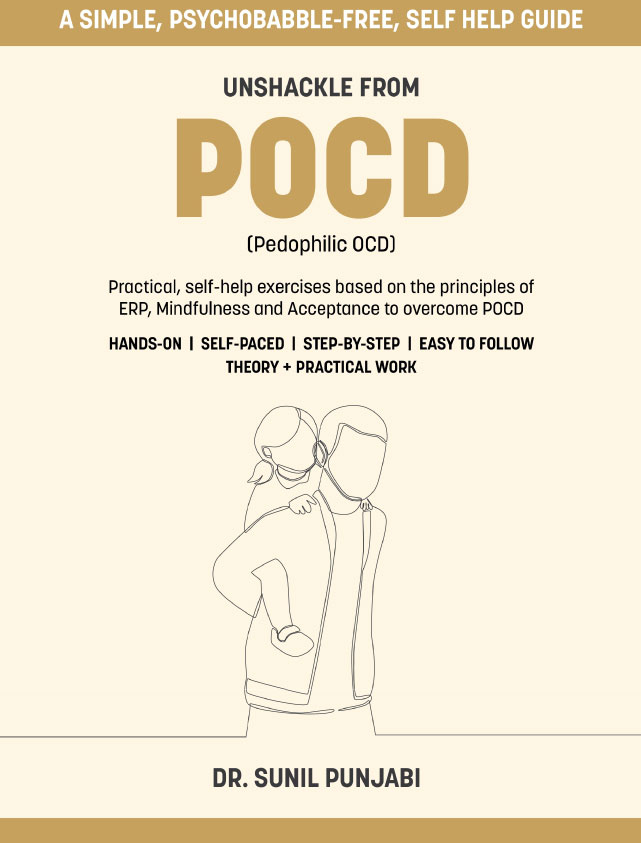
The book explains how POCD develops, why intrusive thoughts become so frightening, and how OCD creates a relentless demand for certainty. Readers learn how to identify their triggers, intrusive thoughts, compulsive behaviours, and avoidance patterns. By understanding the mechanisms that drive OCD, it becomes possible to respond differently and gradually weaken its grip.
How This Book Will Help
At the core of the book is a step-by-step introduction to Exposure and Response Prevention (ERP), the most effective psychological treatment for OCD. Readers learn how to gradually face feared thoughts, situations, and uncertainties while resisting compulsive responses such as checking, reassurance-seeking, analysing feelings, researching online, or mentally reviewing past experiences. The goal is not to prove or disprove fears but to develop greater tolerance for uncertainty and reduce OCD’s influence over daily life.
Drawing upon principles from mindfulness and acceptance-based approaches, the book also offers practical strategies for responding to anxiety without becoming entangled in it. Readers learn how to step back from intrusive thoughts, reduce compulsive monitoring, and focus their attention on living according to their values rather than their fears.
The book includes practical exercises and worksheets designed to help readers apply recovery principles to their own experiences. These tools can be used to identify OCD patterns, track progress, challenge avoidance behaviours, and build confidence throughout the recovery process.
If you are exhausted by constant doubt, frightened by intrusive thoughts, or trapped in endless efforts to gain certainty, this book provides practical tools and evidence-based strategies to help you move towards recovery and regain control of your life.
What You’ll Learn
-
What POCD is and how it differs from genuine attraction
-
Why intrusive thoughts become so distressing
-
How OCD creates doubt, fear, and uncertainty
-
Common compulsions associated with POCD
-
The role of reassurance-seeking and self-monitoring
-
How avoidance behaviours maintain OCD
-
The principles behind Exposure and Response Prevention (ERP)
-
Mindfulness and acceptance-based approaches to recovery
-
Practical exercises and worksheets to support long-term progress
Testimonials For The Book (on Amazon.com)
Testimonial 1:
As a therapist specializing in OCD, I have struggled to find effective resources tailored specifically for clients dealing with POCD. This workbook has been an absolute game-changer—not only in providing structured guidance for my clients but also in helping them feel seen and understood.
The workbook is thorough, evidence-based, and written with a deep understanding of the complexities of POCD. It balances psychoeducation with practical exercises, making ERP approachable and actionable. Clients have found the exercises challenging in the best way—pushing them toward recovery while feeling supported by the workbook’s compassionate and validating tone.
I have seen firsthand how this resource has helped my clients break free from the grip of shame, uncertainty, and avoidance. It has given them the tools to engage with their fears in a structured way, reducing distress and improving overall functioning. Given the severe lack of POCD-specific resources, I am beyond grateful for this workbook and will continue recommending it to clients who need specialized support.
If you’re a therapist working with POCD, or someone struggling with these intrusive thoughts, I cannot recommend this workbook enough. It fills a critical gap in OCD treatment and has been invaluable in my practice.
Testimonial 2:
Dr. Sunil Punjabi has provided an excellent self-help resource for families coping with POCD. He treats the subject matter with the sensitivity and respect that the subject matter deserves, while maintaining a direct voice that does not attempt to avoid uncomfortable topics. There is no magic cure offered in “Unshackle from POCD”, rather it provides a practical, and tractable, structure for individuals struggling with OCD – and equally critical, education for their Caregiver.
I’ve had the opportunity to speak directly to Dr. Sunil Punjabi as well, and I can confidently attest to the sincerity and professionalism of this knowledgeable psychologist. He is sympathetic and personable, while articulating clearly to help families better understand an often complex and confusing disorder.
Along with the purchase of the the Unshackle from POCD workbook, several psychological tests are also provided as online resources in the form of downloadable Psychometric Scales and spreadsheets. These tests are standardized tools used to measure psychological traits, attitudes, or behaviors, and a clinician is not needed to administer them. These digital resources include a dashboard where progress can be tracked over time which include goal metrics that follow the GAR (green, amber, red) structure.
Foremost, an individual diagnosed with OCD (including the non-diagnosable subtypes) must be committed to improvement and difficult work. Unshackle from POCD does not provide an easy path, but it provides a science-informed framework that offers the best chances for living a successful life for those that struggle with POCD, for their Caregivers (usually a wife), and the holistic family unit.
In conclusion, I offer a deep gratitude for Dr. Sunil Punjabi and the Unshackle from POCD resource that he has created. If you are interested in the topic of POCD, this workbook is highly recommended.
Frequently Asked Questions
What is POCD?
POCD, or Pedophilia-Themed Obsessive-Compulsive Disorder, is a subtype of OCD characterised by unwanted intrusive thoughts, fears, images, or doubts about being sexually attracted to children. These experiences cause significant distress and are typically inconsistent with the individual’s values, beliefs, and identity.
Does having intrusive thoughts mean I want to act on them?
No. Intrusive thoughts are a common feature of OCD and can involve themes that are particularly upsetting because they conflict with a person’s values. The presence of an intrusive thought does not indicate desire, intention, or likelihood of action. In POCD, the distress often comes from the fear that the thoughts might mean something important when they do not.
Why do I keep analysing my thoughts and feelings?
Many people with POCD become trapped in compulsive mental checking. They may analyse thoughts, monitor bodily sensations, review past experiences, or seek certainty about their reactions. While these behaviours may temporarily reduce anxiety, they often strengthen OCD and make doubts return more frequently.
What is Exposure and Response Prevention (ERP)?
Exposure and Response Prevention, or ERP, is the most widely recommended psychological treatment for OCD. ERP involves gradually facing feared thoughts, situations, or uncertainties while resisting compulsive responses. Over time, this helps reduce fear and teaches the brain that uncertainty can be tolerated without relying on rituals, checking, or reassurance.
Can POCD be overcome?
Many people with POCD experience significant improvement through evidence-based treatment such as ERP. Recovery does not require eliminating intrusive thoughts completely. Instead, it involves changing the way those thoughts are interpreted and responded to so they no longer dominate daily life.
Whom is this book for?
This book is intended for individuals struggling with POCD, intrusive thoughts related to this theme, excessive self-monitoring, reassurance-seeking, avoidance behaviours, or persistent doubts about what their thoughts mean. It may also be useful for family members seeking to better understand OCD and mental health professionals looking for a patient-friendly resource.
Is this book suitable alongside therapy?
Yes. Many readers find that self-help resources can complement professional treatment by reinforcing recovery principles between therapy sessions. The exercises and worksheets in this book are designed to support learning and practice, while professional guidance can help tailor treatment to individual needs.
Important Note
This book is intended as a self-help resource and educational guide. It is designed to complement professional treatment, not replace it. Readers experiencing significant distress are encouraged to work with a qualified mental health professional, particularly one with experience treating OCD using evidence-based approaches such as ERP.